Volume 24 article 1331 pages: 257-276
Received: Nov 07, 2025 Accepted: Apr 23, 2026 Available Online: May 24, 2026 Published: May 31, 2026
DOI: 10.5937/jaes0-62651
ENERGY RETROFIT AND RENEWABLE ENERGY INTEGRATION FOR RESILIENT PUBLIC SCHOOL BUILDINGS: A VALIDATED CASE STUDY USING BUILDING ENERGY SIMULATION
Abstract
Jordan places a high priority on improving energy security by lowering energy costs and CO2 emissions through enhanced energy efficiency, boosting investment in renewable energy sources, and diversifying the energy mix. Upgrading public facilities in the area, such as schools, has recently attracted a lot of interest. This study uses carrier HAP and related computations to examine the energy-retrofitting saving potentials model of a local public school, which is driven by the retrofit framework. Five passive and active solutions were evaluated, including the installation of an 84-kWp photovoltaic system. Investment in a PV system, which has a payback period of less than five years, secured a break-even outcome for the expected energy expenses of the resilient school pilot project along with its associated energy demands when strategically paired with other measurements, such as the use of 5cm XPS and 10cm CMU to existing walls and 5cm XPS and other insulative materials to roofs when adhering to local energy code requirements for building envelope retrofits.
Highlights
- The study evaluates energy-retrofitting strategies for a local public school in Jordan using the Carrier HAP simulation tool to enhance energy efficiency and reduce CO₂ emissions.
- Five passive and active retrofit solutions were evaluated, including the installation of an 84-kWp photovoltaic system integrated with building envelope insulation upgrades.
- The sized PV system achieved a payback period of under five years, demonstrating strong economic and environmental viability for school retrofit projects in Jordan.
Keywords
Content
1 Introduction
Energy security is extremely overarched by governments across the world [1]. It plays a crucial role in guiding various industries and, consequently, the economies of developing countries [2]. Jordan is a country located in the Middle East and North Africa (MENA) region. It relies mostly on the scarce supply of fossil fuel resources to generate electricity, the primary energy source used to secure power in the kingdom [3]. Such a power source is one of the primary energy carriers used by humans these days. Global power output would need to increase in order to support the expected economic growth and global improvement of human well-being [4].
Locally, reducing Jordan's heavy reliance on foreign energy requires a strategic pivot toward domestic renewable sources and enhanced efficiency measures to bolster economic stability. This transition to a diversified energy mix is essential for long-term national sovereignty and lowering the carbon footprint [5]. Governmentally, the Jordan National Energy Strategy summary report 2020–2030 states that the Ministry of Energy and Mineral Resources in the kingdom helps to fulfil the national objectives of accomplishing sustainable growth levels – through various strategic objectives of the energy sector - toward securing good living standards for all people, creating environments that are attractive to foreign investment, promoting social sustainability through the reduction of poverty and unemployment, and enhancing the levels of fairly distributed services that are made available to the public. Illustratively, the report highlighted such strategic objectives to read as: varying energy resources and types, increasing the share of indigenous resources compared to the overall energy mix, boosting the investment in efficient energy across all associated sectors, cutting the energy bill of the local economy, and evolving a regional energy hub in the country for the sake of exchanging all energy forms accordingly [6].
Universally, namely at the United Nations (UN) Climate Conference (COP 28), which was held in Dubai in 2023, the participating nations, parties to the United Nations Framework Convention on Climate Change (UNFCCC), including Jordan, recognized the impending transition from fossil fuels to renewable energy sources. To keep global warming to 1.5°C over pre-industrial levels by the end of the century, the 130 countries that attended the meeting primarily committed to tripling the amount of renewable energy produced globally and doubling the pace of annual energy efficiency growth by 2030 [7]. Hence, Jordan should address such challenges within a planned and innovative frame of sustainable and renewable solutions to fulfil its commitment toward reducing GHG emissions, especially carbon dioxide (CO2) emissions.
Emerging challenges necessitate creativity and innovation to secure sustainability [8]. Through innovations, the entire society - including institutions, organizations, and communities - can develop into more sustainable ones. They also help to alter social norms and environmental conditions [9]. The advancement of alternative energy technologies is a significant source of innovation and the cornerstone of the future green economy, which will have high technological sophistication, energy security, and little environmental effect [10]. For instance, Photovoltaic (PV), solar thermal technology, wind energy, CO2-free energy, and hydrogen energy systems are sustainable and renewable energy technologies that could be eligible to moderate the energy crisis and assist in establishing a sustainable energy system [11,12, 13]. The adoption of renewable energy sources in Jordan is mostly driven by energy security policy considerations, such as the need for a diverse energy supply and a decreased reliance on imported energy [10,11].
As environmental responsibility and sustainability gain traction in the Middle East, academic institutions have an opportunity to lead the way in developing solutions that benefit the entire community. Through making existing campus buildings more energy efficient, retrofitting interventions can lower carbon emissions without having to be highly costly or time-consuming. Most of the time, the infrastructure needed is already in place. Technological developments and maintenance on the existing equipment that powers heating and cooling systems can be done with minimal disruption to service delivery. Prolonged collaborations with energy partners may also result in significant extra cost savings and continuous advancements in technology [14]. Sustainable innovations would balance the long-term effects of the process and outcome with the demands of individuals, society, economy, and environment [15]. Institutionally, it is believed that both the retrofitting of existing infrastructure and the integration of smart technologies during the development stage will unquestionably benefit the crucial sector of education. This would enhance the quality of the air, reduce carbon emissions, conserve water and power, and advance the health and welfare of educators and students [14]. The institutional component has recently been added to the sustainability model as the fourth pillar, joining the social, economic, and environmental ones. This integration emphasizes the crucial role that institutions play in determining the trajectory of sustainable development [16]. In the realm of the building market, the realization of such development in the 21st century is contingent upon policymakers' complete conviction that the built environment can be rendered more sustainable through the retrofitting of existing building stock [17].
Moreover, while a significant amount of research focuses on how prospective construction projects might save energy, the bulk of the energy used globally comes from existing structures [18]. Comparatively, existing buildings are generally energy inefficient when compared to more recently built ones. Deep retrofitting witnesses rapidly increasing awareness, for instance [19]. Within our warming universe, GHG emissions from building construction, heating, and cooling account for ~40% of global emissions, a significant share read as 27%, 6%, and 7% for building operations, for building construction industry, and other construction industries, respectively. Such figures urged Abu Dayyeh in his article in The Jordan Times to necessitate the need for expanding the obligatory regulations set for erecting new sustainable buildings to those already existing [20]. Moreover, in the next 30 years, the International Energy Agency (IEA) predicts that the world's building floor area will increase by 75%, with emerging markets and developing countries accounting for ~80% of this growth. According to the Net Zero Emissions by 2050 Scenario (NZE Scenario), total direct emissions from the building sector must drastically decrease, from almost 3 Gt in 2020 to less than 2 Gt in 2030 and to barely 120 Mt in 2050, despite the significant commensurate increase in energy demand by the middle of the century. Furthermore, according to a report published by the IEA, by 2040, ~67% of the world's current building floor area will still be occupied. The objective is to adapt 20% of the current building stock to a zero-carbon ready state by 2030, which will mean higher renovation rates - at least 2% by then as opposed to less than 1% now [21]. Currently, energy utilization strategies will be impacted by the net-zero emission objective set by numerous countries [22].
In consonance with such beliefs and figures, Younis et al. [23] in their field study on samples of urban low-middle income apartments in the capital Amman found that ~75% of them are energy inefficient, calling for thriftly retrofitting measures and raising public awareness towards sustainability and associated solutions [23]. Nonetheless, in an evaluative study for retrofitting public school in Jordan toward energy efficient building using the Design of Experiments (DoE), the researchers applied three local and regional building codes to enhance the energy efficiency of the case-study school, by studying which 6 construction cases of the building; which were derived through manipulating materials and hence thermal transmittance (U-values) of building’s envelope components, and Window-to-Wall Ratio (WWR). It was concluded that the primary significant elements influencing the building's heating and cooling loads were determined to be U-values of roof, wall, window, and the WWR (north and south), sequentially [24].
Abu Dayyeh [20] claimed that the retrofitting process would result in developing a better economy, securing jobs, and reducing maintenance and running costs. Turning existing energy inefficient buildings into sustainable ones would also raise their market value, and hence their marketable potential, and enhance the aesthetic appearance of cities. Most importantly, it would dwindle CO2 emissions and hence help Jordan fulfill its challenging pledge to cut emissions by the year 2030 and later [20]. Additional benefits of retrofitting buildings would include providing better-quality thermal comfort and a healthy indoor environment, leading eventually to improved productivity [19]. For instance, children's health and academic performance are impacted by the four components of indoor environmental quality (IEQ) that are found in school buildings: temperature, acoustics, visual environment, and indoor air quality. Higher IEQ can enhance test results and cognitive function while lowering the prevalence of asthma and absenteeism [25]. Building owners would also cut energy bills for their energy-inefficient assets when retrofitting them [19]. When compared to erecting new structures, retrofitting is claimed to consume less time and resources, especially if large structural interventions are not needed during the retrofitting process [26]. Three primary categories might be used to group energy retrofitting measures: mechanical system upgrade, electrical system retrofitting, and energy retrofitting and improvement of building envelope [27]. For instance, compared to non-inverter (on/off) A/C, inverter one is higher in energy-efficiency, making it eligible for securing up to ~30% of electricity power bills during steady-state, seamlessly provides the desired room temperature free of swings regardless of the fluctuating outside temperatures, is normally quieter, has a longer lifespan due to less mechanical stress, and generally requires lower maintenance. Moreover, although the initial cost of inverter A/C is higher than that of the on/off unit, the former has considerable long-term savings thanks to lower power bills and maintenance [28]. Moreover, for large retrofitting projects, including schools, attaining green building certification, such as the Leadership in Energy and Environmental Design (LEED), has become commonplace because of the related resource efficiency, lower operating costs, and improved indoor environmental conditions [29].
However, the primary problem and the subject of several research initiatives is determining the most economical pairings of high-efficiency technological systems with building envelope refurbishment options that use renewable and low-emissive energy sources [19]. For example, Younis and Tawalbeh [30] in their research project of retrofitting a historical building in Jordan have suggested three different retrofitting scenarios to consider a variety of solutions according to the prospective budget of owners, with no compromise on energy efficiency nor the historical value of the building. The scenarios applied passive, active, and renewable energy sources schemes. For instance, they found that employing PV panels on the building’s roof could annually save ~81% of the building’s conventional energy consumption, which, when accompanied by retrofitting the building envelope, would surge annual savings to ~100%.
Relative to the aforementioned importance of the institutional pillar in the sustainability model and associated retrofitting topic, in Jordan, there has been a lot of interest in retrofitting public buildings, including schools, in recent years [31]. H. Ali and R. Hashlamun [26] even necessitated and highlighted retrofitting existing public schools there. The construction of new school buildings with improved physical qualities was started in 2003 by the Ministry of Education (MoE) in partnership with non-governmental organizations (NGOs). The new school layout was designed to accommodate site configurations rather than adhere to any particular conventional design. The new schools' materials, architectural features, and envelope layouts adhered to donor specifications. However, the majority of recently built schools featured insulated roofing and walls. Prior to the year 2003, the MoE in the kingdom established standard designs for all school buildings in the country. Classroom arrangements should follow these designs, which call for a linear configuration around a single or double-loaded corridor that is in contact with the building envelope's exterior. Prototypical models share a common envelope design and employ typical construction materials, lacking thermal insulation, though [26]. According to Jordan's statistical yearbook, which was issued in 2023, schools in Jordan could be classified, according to authority of supervision to 1%, 2%, 43%, and 54% as other governmental, The United Nations Relief and Works Agency for Palestine Refugees in the Near East (UNRWA), private schools, and ministry of education (governmental/public), respectively. The capital Amman houses the majority of schools built in Jordan by ~32% of the total 7505 schools, followed by Irbid governorate, which involves ~19% of the same overall schools in the kingdom [32].
Public schools built before 2003 in Jordan could be classified into two categories. The 1st one is the schools that were constructed in the period 1960-1970, during which the Ministry of Municipalities constructed small-scale school buildings mostly made up of classrooms without any insulation on the walls or roof. The 2nd category spanned between 1970 and 2000, when the MoE embraced the construction of large-scale prototypical school buildings, starting with the first Hai Nazal and continuing until the seventh prototype. The sectoral prototype from 2000 on served as the last model used in the construction of model school buildings. These schools had more practical areas than their predecessors, but their envelope was a straightforward arrangement of concrete blocks and still without any insulation on the walls or roof [33]. One of the most challenging topics that confronts schools’, including public ones’ agenda in Jordan, is thermal comfort. For example, energy-efficient measures are severely lacking in Jordanian public schools. The greatest institute for applied energy research in Jordan is the Royal Scientific Society's (RSS) National Energy Research Centre (NERC), and it is well knowledgeable about the energy conditions of public schools there. It conducted explicit energy audits for over +200 schools in the kingdom at different locations from north to south. They found public schools to have a subpar construction envelope with single-glazed windows and lacking thermal insulation. Although diesel boilers are available at many schools, they are often used for heating spaces in winter. Alternatively, the majority of schools rely on kerosene heaters to heat their classrooms. Even the few inefficient on/off-air conditioning (A/C) units, used for both heating and cooling spaces, are available at public schools in nurseries, kindergartens, and administrative offices. For lighting fixtures, fluorescent tubes, compact fluorescent lamps (CFL), and floodlights are the units used in the schools in question, operated by using only on/off switches. Renewably, although PV systems are the most common choice locally for harvesting renewable energy sources, no public school employed them except for those involved in nationwide initiatives that promote and finance the adoption of renewable energy technologies [34].
Ayoub Abu Dayyeh - in his article in the Jordan Times [31] on schools retrofitting - has considered the thermal insulation topic as the most crucial dimension for school pupils due to its importance in providing a thermally comfortable internal environment for them around the year; however, it has been unjustly relegated to the back burner, due to cost. Abu Dayyeh, the energy and green buildings consultant, claimed that investing in thermal insulation could have a ~2-5-year Simple Payback period (SPB). Consulting local experts, employing safe materials, considering safety in reference to structural integrity, air infiltration control in heating season, and associated windows specifications, and shading devices are other priorities that Abu Dayyeh has elaborated on in the same article, which should be considered when retrofitting schools. The same researcher believes that retrofitting schools would deliver a positive message to the community, parents, employees, and students about our dedication to environmental responsibility and adherence to construction codes. Furthermore, once the students' health, safety, and humanity are protected, we can improve the school's reputation and win over the community support [31]. All in all, Cities' retrofit programs may prioritize school buildings in an effort to lower associated emissions and operating energy expenses while also growing the regional retrofit industry [35].
Motivated by His Majesty King Abdullah II Ibn Al Hussein's Royal Vision, Jordan's MoE is making sure that education is a compelling priority. The Ministry is concentrating on enhancing the successes of the teaching and learning process, boosting education standards to increase outputs, quality, and competitiveness, and overcoming obstacles in order to fulfill the suggestions of the seventh discussion paper. The MoE has started preparing the Education Strategic Plan (ESP) (2018–2022) using a widely participatory approach in order to reflect this purpose [36]. Jordan's national education priorities are outlined in the MoE's ESP (2018–2022), which also provides a cogent set of methods for achieving the plan's goals and overcoming obstacles. It is based on the objectives of the National Human Resources Development Strategy (2016–2025), which combines essential components for achieving the globally recognized Sustainable Development Goals (SDGs) by 2030 and offers the long-term vision for Jordan's education system. Since the ESP's inception in 2018, there have been significant rises in Syrians' gross enrolment rates (GERs) at the KG2, basic, and secondary education levels by 48%, 73%, and 27%, respectively, in 2019–2021 [37]. Furthermore, according to evidence and learning report issued by the United Nations Educational, Scientific, and Cultural Organization (UNESCO), more than 200,000 pupils have switched from private to public schools because of the coronavirus disease (COVID-19) pandemic [38]. Such transfer of KG2, basic, and secondary levels students was driven by the detrimental economic effects of the pandemic and placed further strain on an already overburdened system, leading to a rise in double-shift teaching periods and schedules. Sustainably, ESP highlighted renovating structures and stated that MoE, supported by partners, is on the course to meet or surpass the 2022 targets in terms of the number of schools that are repaired and retrofitted to improve their accessibility, to accommodate pupils with special needs, for instance. The same ESP attributed the delays in constructing new school buildings to the shortage of funding allotted for school construction and the scarcity of MoE-owned lots [37].
Regionally, simulated results for retrofitting a primary school building located in the United Arab Emirates (UAE); which was built in 2008, showed 57% reductions in electricity consumption to secure cooling requirements. The latter saving resulted from retrofitting the building’s envelope to improve U-values associated with replacing the existing A/C machines with more energy-efficient systems [39]. In Egypt, the researchers studied the possibility of turning a private school building in the country into a net-zero energy one. Design Builder simulator was employed to fiscally test the suggested retrofitting measures. It was found that 33% of energy consumption savings could be secured when energy retrofitting measures were applied to school buildings efficiently. Employment of 128 PV panels on the school’s roof also achieved electrical neutrality [40].
Universally, different countries found retrofitting inevitable to tick certain boxes to the agenda of making their schools sustainable and hence investing in greener and less expensive solutions across different dimensions. For example, Japan's Earthquake-Resistant School Buildings Program has improved the seismic safety of Japanese educational institutions through seismic retrofitting, thereby enhancing the safety of Japanese students, instructors, and communities. The percentage of public elementary and junior high schools that are earthquake-resistant has grown since the program's acceleration in 2003, from less than 50% to over 95% of schools in 2002 and in 2015, respectively [41]. According to a report on school resilience and seismic retrofitting in Japan, the latter’s experience is claimed to be helpful to other nations, including developing countries, thinking about starting their own retrofitting initiatives [42]. Relatively, associated statistics proved that all of the public elementary and junior high schools in Japan have met the standards of earthquake resistance there [43]. Such surge figures in commitments to retrofitting schools in Japan over time prove the vital necessity of rehabilitation of existing buildings, including schools, toward sustainable development. In the United States (U.S.), retrofitting schools is found to be more sustainable and feasible than building new ones. Also, the carbon emissions and resource consumption of rehabilitating an elementary school are found to be 9–12% lower than those of establishing a new one. Retrofitting and reusing such a school are also found to be 7-11% and 11-14% less harmful to human health and improve ecosystem quality than creating elementary schools, respectively. Moreover, a new school building that is 30% more efficient than an average-performing existing one requires 10–16 years to offset the negative climate change impacts caused during construction (i.e., carbon dioxide equivalent (CO2e)), through efficient operations [44].
In Europe, schools across the United Kingdom (UK) have received advice from the “Let's Go Zero” campaign, which supported schools in the country to meet the target of becoming carbon neutral by 2030, on how to reduce expenses and carbon emissions in the heating season. The recommendations ranged from straightforward actions like ensuring that lights and heating systems are turned off when the school is not used to heating classrooms to just 19°C or organizing a switch-off campaign with students. Aiming to fulfil its target by 2030, 1,700 schools, colleges, and nurseries - representing ~850,000 students and 135,000 employees - have joined the campaign to demonstrate their commitment to supporting their kids and being a part of the constructive solution. Moreover, ground source heat pumps were suggested as an ideal renewable energy source for schools, as they have control over their site, and such technology would be helpful for the cooling season as well [45]. In Italy, the first trial of retrofitting an existing school was found to noticeably achieve better energy performance and savings, and the building was predicted to achieve electrical neutrality [46], for example.
The above literature established the retrofit framework of this research. It clearly conveys the vital role that energy-efficient retrofitting interventions would play in improving living quality at different levels and raising the market value of public buildings, including schools, in a country. A mostly noticeable consensus was found- driven from different cases of retrofitting schools around the world-on the inevitable rewards owners would receive from renovating their assets toward sustainable buildings, helping their governments to meet associated local and international agendas. However, to the best of the authors' knowledge, the literature body, on average, was found lacking in local initiatives that would broaden their vision and highlight the topic of retrofitting schools in Jordan in a more explicit and technical approach supported by vigorous evidence; to further extend the awareness of such vital intervention mechanisms to local schools, especially public ones. Accordingly, this research tries to bridge the gap and further investigate the potential of retrofitting public schools in Jordan, in addition to those scarcely found associated studies, through tackling a case study rendered as a funded pilot project, based on a robust literature review, though. Hence, this research aims to achieve the following objectives:
- To review the literature that tackles the crucial importance of and need for highlighting the retrofit topic, especially for schools, to build on it while progressing in the project, and to work as a robust framework for spreading awareness about such a hot topic, inform, and hence encourage development of associated initiatives.
- To investigate the energy consumption status of the existing building case study and identify, assess, and optimize the required interventions, such as the optimum passive and active approaches, including building envelope materials, A/Cs, PV systems, and lighting fixtures, for example. This would pave the way for developing a plan for making the current building a more sustainable and energy-efficient structure.
- To establish the optimum potentials of economically retrofitting public schools in Jordan that would be read as a resilient retrofit model and a pilot project toward energy-efficient public schools in the kingdom, and hence help lower local energy bills and fulfill Jordan’s associated commitments, and inevitably to disseminate knowledge to experts and stakeholders about retrofitting associated public schools’ framework.
2 Materials and methods
The case study building of this project is a pilot school project that was adopted by NERC at the RSS/Jordan, through “High Energy efficiency for the public stock buildings in Mediterranean” (SOLE) project funded by the EU Program-ENI CBC Med [47]. SOLE project, which involves seven partners, including Jordan, encourages creative and feasible energy-rehabilitation projects of public buildings in partners’ countries [48]. The school was selected by MoE in accordance with the SOLE project’s guidelines. It was initially surveyed to investigate its base case energy efficiency. The survey has examined the building’s envelope, lighting fixtures, and the availability of A/Cs and/or renewable energy harvesting equipment/systems. Subsequently, alongside associatively collected data about the case study, an in-depth energy efficiency assessment was prepared, which informed the base case model with rich data for energy simulation purposes. The thermal comfort criteria are associated with retrofitting the case study building, such as temperature range, relative humidity, thermal zoning, envelope insulation, and natural ventilation.
This research employed approaches of energy simulation and economic analysis using the SPB method in addition to feedback from school spokespersons to help optimize the energy retrofit model and hence achieve its objectives within its associated retrofit framework. The SPB method was initially chosen as a primary indicator to provide a straightforward, 'first look' assessment of the project's financial feasibility for stakeholders who prioritize immediate liquidity and rapid capital recovery.
This research also employed the Heating, Ventilation, and Air Conditioning (HVAC) carrier Hourly Analysis Program (HAP) software to create the base case of the study’s model and hence calculate design cooling and heating loads for the building spaces before and after applying the designed energy retrofit interventions. Existing building’s envelope, classrooms’ orientation, equipment, and occupancy were all considered for data input of the base case model to facilitate running HAP. It was taken into consideration that thermal comfort criteria associated with retrofitting the case study building, such as temperature range, relative humidity, thermal zoning, envelope insulation, and natural ventilation.
HVAC designing carrier HAP is part of the program libraries known as E20-II, one of the leading research firms in the industry [49]. According to Al Abir’s [49] research, the program employs the American Society of Heating, Refrigerating, and Air-Conditioning Engineers (ASHRAE) transfer function method for calculating loads. The same researcher in his manuscript has compared manual calculations with HAP software output for determining the cooling load required for ventilation, air filtration, and thermal and humidity comfort to find out the most ideal way of implementing an HVAC system in a building in Bangladesh. The researcher found that the difference between the two methodological approaches is less than 1.2%, and HAP could be used for all building types to compute cooling loads and hence choose the associated unit [50]. Moreover, according to S. Zaphar and T. Sheworke [51], any building design can utilize the HAP program to determine the systems to be employed and compute the load. Furthermore, R. Fassbender [52], a LEED AP, discussing the best modelling software for building energy, listed Carrier HAP as one of the items in the narrowed package of software [52]. The energy simulator HAP calculates cooling and heating loads using typical meteorological year (TMY) weather data and the Transfer Function Method, and is capable of simulating distinct kinds of systems, to name a few. A group of researchers has highlighted such latter potentials of the program in their manuscript, in which they employed it to help study the energy rating of residential constructions in the capital Amman, toward suggesting an energy rating scale for such buildings guided by associated Jordanian codes [53].
2.1 The case-study building: model and inventory
This research case study, namely “Iskan Al-Faiha School” (see Fig. 1), was built in 2010 and is located in Madaba province, 33 km south-west of the capital Amman.
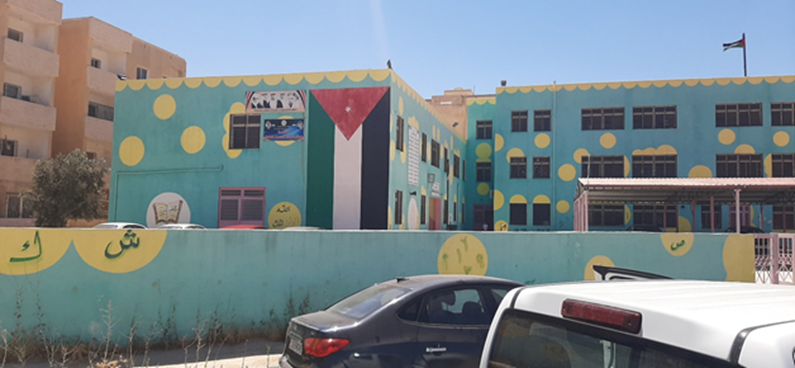
Fig. 1. A north-east exterior view of the school
The weather in the city of Madaba varies from very hot to moderate. The average temperature reaches a sweltering 34°C each day in August. The coldest month of the year, January, has comforting temperatures of 16°C. There is minimal precipitation in the arid region where Madaba is situated. Being a desert city, it receives an average of only 195 millimeters of precipitation annually. The city receives an average of 50mm of precipitation over nine wet days in January. Given that there are zero wet days and only 0.3 mm of precipitation, July is noticeably drier in the city of Madaba [54].
The primary public mixed school is situated at ~31°43'08.1" N latitude and ~35°46'29.6"E longitude with 786m altitude (see Fig. 2). It sits on a 2,930 m2 lot as one building mass composed of three floors with ~1,800m2 total built area and ~4,820m3 heated volume. It has 30 classrooms and 41 spaces for different other purposes, including 11 administrative rooms. The school welcomes 725 pupils and works on a morning teaching schedule only.
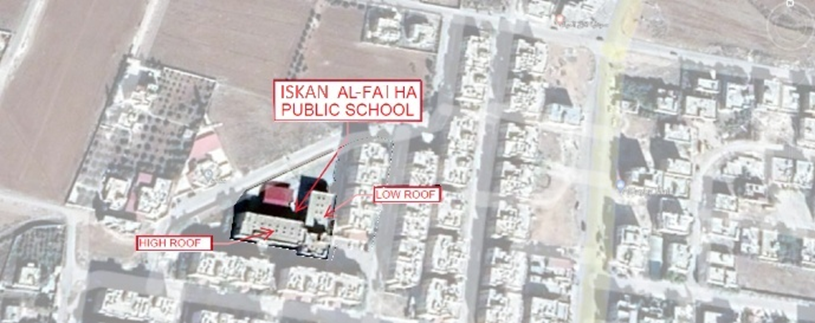
Fig. 2. A satellite image for Iskan Al-Faiha public school (highlighted)-source: [55], located at 31.72° N latitude and 35.78° E longitude, source: [Google Maps], showing the lower roof unit (right) and higher roof one (left) as clearly appears in Fig. 1, edited by the 1st author using Adobe Photoshop
The school consumes ~30,000 kWh of electricity annually, a cost of ~JOD3,000 for the same time period. Data was obtained based on analyzing 12 electricity bills at a 0.10 JOD/kWh electricity tariff. ~60% of such energy was found to be used for lighting the school. No renewable energy sources were harnessed to serve the building, though. The lighting system was found conventional one, which included metal halide (MH), and fluorescent fixtures in addition to compact fluorescent lamps (CFL) with on/off switches used to control it. The fact that none of these systems are staffed or under personnel supervision could result in longer operating hours, more system failures, and inevitably a shorter nominal operating lifespan for the equipment. The rest 40% energy consumed share goes for operating the equipment, such as a number of 12 on/off 2 Ton A/C units, one 3.5kW electric heater, and personal computers (PCs), to name a few. The A/C units consume ~18,000 kWh/annual electric energy [56].
As a result of the detailed energy audit [56], which was undergone for the base case school building, the latter envelope was rendered as energy poor, since the walls and roofs are not insulated with single-glazed and aluminum-framed windows. The external walls, roofs, and windows had occupied a total area of (2,171), (720), and (266) m2, respectively. Structurally, all building units are a concrete column/slab arrangement with columns along common grids. Existing external wall layers are 3cm thick of deco plaster, 15cm cavity concrete masonry units (CMU), 5cm air space, 10cm CMU, and 2cm plaster and paint external finishes, sequentially forming a 35cm total thick typical wall model. Built roofs are typically constructed of ribbed reinforced concrete ~35cm thick slabs consecutively involving 2cm plaster and paint, 18cm hollow CMU, 7cm concrete cover, ~2-8cm slope screed topped with exposed asphalt rolls. Calculated U-values for exposed walls, roofs, and windows were found as 1.5, 2.5, and 5.6 W/m2K, respectively. When referring to an associated building energy guide [57], such thermal transmittance values for external walls and roofs were found to be noncompliant with the maximum ones allowed by local codes. U-value of base case model windows is just compliant with the maximum of 5.7 W/m2K allowed by the local codes for the same window type, though. Unfavorably, A/C split units are not available in every classroom (see Fig. 3). As a result, the school uses diesel and kerosene-based heaters to heat every room throughout the winter, using annually ~4,324 liters of fuel in question, according to a school spokesperson.
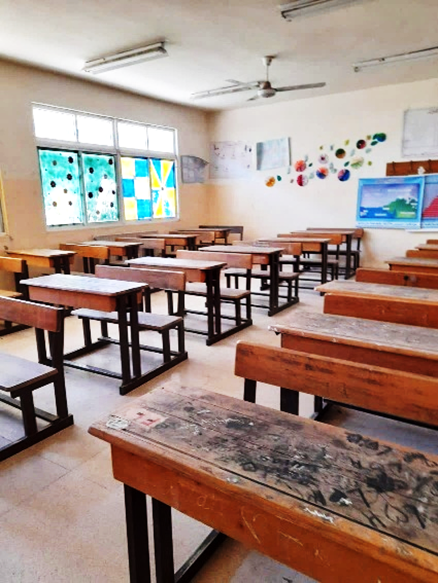
Fig. 3. An interior shot for a base-case classroom. Not all classrooms are equipped with A/Cs; rather, ceiling fans are utilized. Fluorescent tubes are mostly used for lighting classrooms. Also, the single-glazed and aluminum-framed windows are the only type that comprise the building’s envelope
2.2 The Carrier HAP software's key data input
The HAP model was developed using a comprehensive set of architectural, operational, and environmental inputs to ensure accurate load estimation and system sizing. Detailed geometric data were incorporated for all conditioned spaces, including classrooms and administrative offices, covering length, width, and height. In addition, the building envelope characteristics were carefully defined, including the areas and constructions of external walls, roofs, and fenestration systems (windows), along with their thermal properties (U-values, materials, and layers) and orientations to account for solar heat gains.
Internal load parameters were also thoroughly considered. This included occupancy profiles for each space, reflecting the number of occupants, their activity levels, and usage schedules. Lighting systems were defined based on fixture types, power densities, and operating schedules.
Machine-wise, efficient A/C units were considered with an average Seasonal Energy Efficiency Ratio (SEER) of 6, and a Coefficient of Performance (COP) of 4. Additionally, all internal loads resulting from electrical equipment were included, such as computers, printers, and other devices, taking into account their heat emission rates (sensible and latent heat gains) and their impact on the overall thermal load.
Furthermore, ventilation and infiltration rates were incorporated in accordance with applicable standards and assumptions, accounting for fresh air requirements and air leakage through the building envelope. Weather data were selected from the HAP climate database corresponding to the building location to ensure realistic simulation conditions, including dry-bulb temperature, humidity, solar radiation, and wind profiles.
Thermal comfort conditions were defined in line with ASHRAE recommendations, where indoor setpoints were assumed to be 24°C for cooling and 21°C for heating. As highlighted earlier, the Carrier HAP employs ASHRAE’s transfer function method for calculating loads.
These inputs collectively enabled the development of a robust and reliable HAP model suitable for both design and energy performance simulation purposes.
2.3 Retrofitting measures/interventions
Five main energy-efficient retrofitting measures were evaluated to improve the energy efficiency status of the building and hence reduce its energy bill and associated carbon emissions. Those interventions involved active scenarios, namely retrofitting lighting fixtures, harnessing natural sources to invest in solar thermal and PV systems, and installation of inverter AC units for cooling and heating spaces, in addition to passively retrofitting the building’s envelope, as further detailed in Table 1.
The existing school’s envelope is highly eligible for retrofitting to thermally adhere to the associated local energy codes. The 2,171 m2 walls (see Figs. 4-6) are recommended to be retrofitted by adding 5cm extruded polystyrene (XPS) layer covered by 10cm CMU and 2cm plaster and paint interior finish (see Fig. 7). Additionally, the 720 m2 roofs are suggested to employ high density nylon fiber waterproof membrane, 5cm XPS, geotextile waterproof sheet, sequentially topped externally by 5cm gravel (see Fig. 8). Furthermore, the 266 m2 single-glazed, aluminum framed windows are to be replaced by double glazed, PVC framed substitutes. The 36W fluorescent tubes and CFL fixtures are found to be entitled to be replaced by 18W light-emitting diode (LED) tubes and 18W LED round panel fixtures, respectively, in addition to replacing the 250W MH lighting fixtures with 50W ones, all with ~25 years expected lifespan.
Using the carrier HAP energy simulator, design cooling and heating capacities for the required school spaces were calculated and sized as 24.5, 30, and 20 tons of inverter AC units for the ground, first, and second floors of the building, respectively, with an expected energy consumption of ~107,127 kWh/year.
Furthermore, a PV system was sized to fit the energy requirements of the school, especially after expected amplified power consumption by new inverter AC units was evaluated toward securing thermally comfortable internal environments for users, yet the regulations established by the Greater Amman Municipality (GAM) regarding aesthetic considerations for PV system installations were referenced. The capacity of the PV active system was generated as of ~84 kWp, to be harnessed by 210 PV modules, taking into consideration potential constraints and obstacles. Tilt angle of the modules is assumed to be 10 °, with a 1m elevated table mounting system height and a 72-kW inverter capacity.
Finally, estimation of water consumption for students facilitated optimizing a 1,400 Liter/day solar thermal system of glazed flat plate collectors to meet the domestic hot water requirements of the school-which the latter lacked at temperatures 50o-60oC, yet not to affect the energy bill of the school. According to associated reports, the system’s efficiency is ~70.3% for harnessing solar energy and converting it to heat.
Table 1. The sized energy retrofit pilot model of the case study school, driven by an established framework
|
Type of intervention |
Type of element/system |
Retrofitting layers |
|
Passive |
Building’s envelope |
Adding 5cm XPS and 10cm CMU to existing walls. Adding 5cm XPS, insulative membranes, and gravel to existing roofs. Replacement of the existing windows with double-glazed, PVC-framed ones. |
|
Active |
Lighting fixtures |
Replacement of 36W Fluorescent tubes with18w LED fixtures. Replacement of CFL units with 18W LED round panel units. Replacement of the 250W MH units with 50W ones. |
|
AC units |
Replacement of existing on/off AC units with inverter ones |
|
|
PV system |
Installation of ~84 kWp capacity solar plant |
|
|
Solar thermal system |
Installation of a 1400 Liter/day capacity solar thermal system |
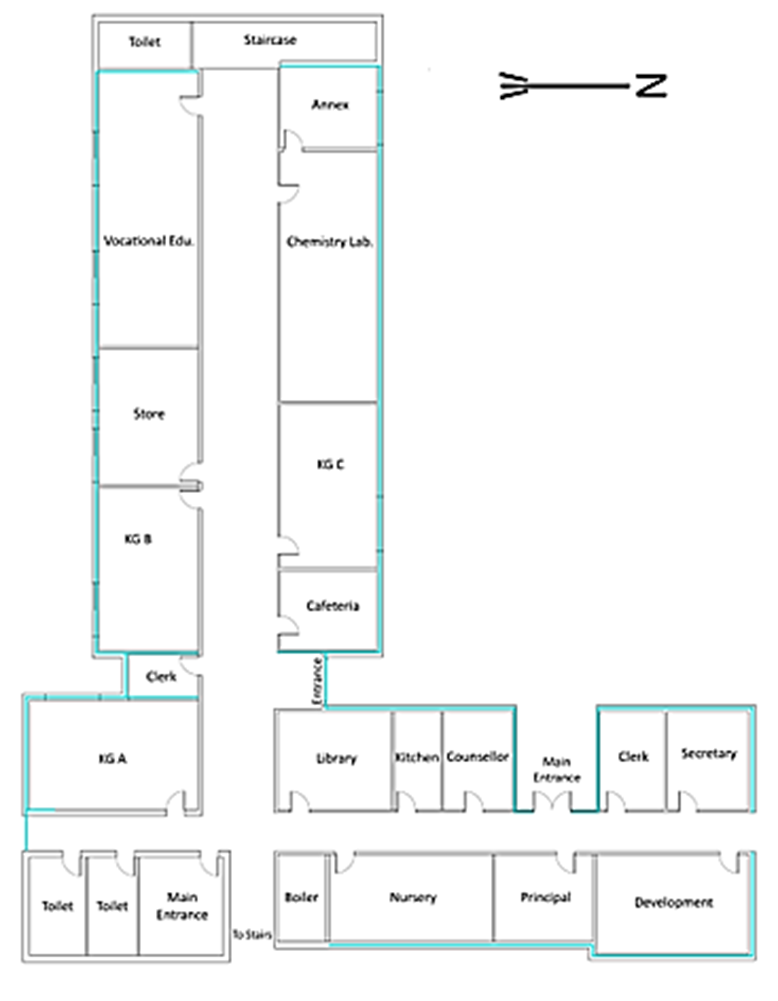
Fig. 4. Ground floor plan of the school (N.T.S.). Blue (thick) lines indicate walls to host 5cm XPS insulation, CMU, and finish layers
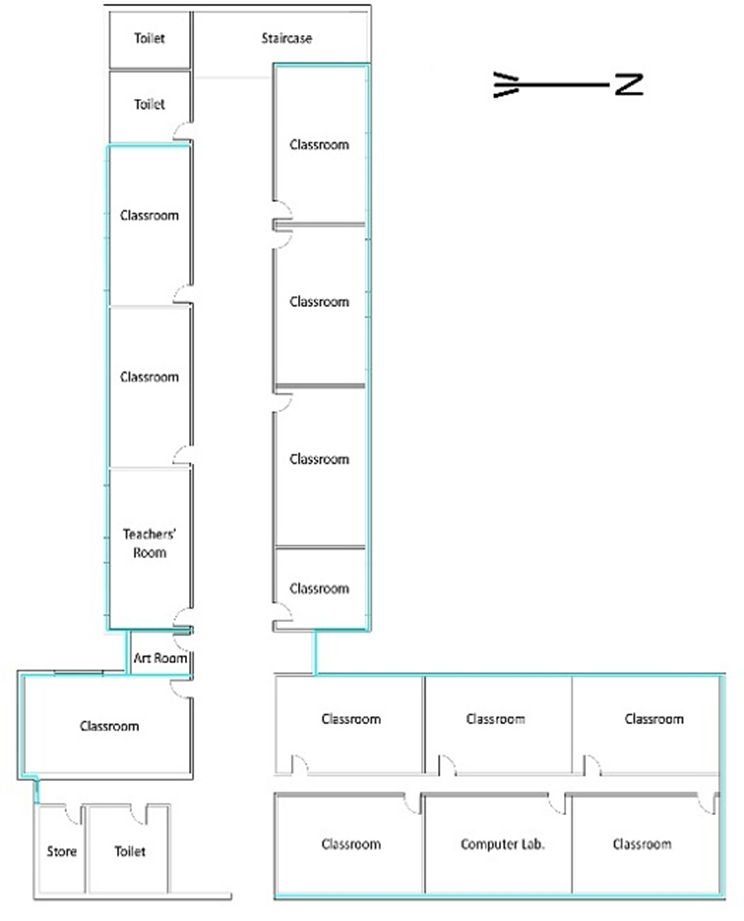
Fig. 5. First floor plan of the school (N.T.S.). Blue (thick) lines indicate walls to host 5cm XPS insulation, CMU, and finish layers
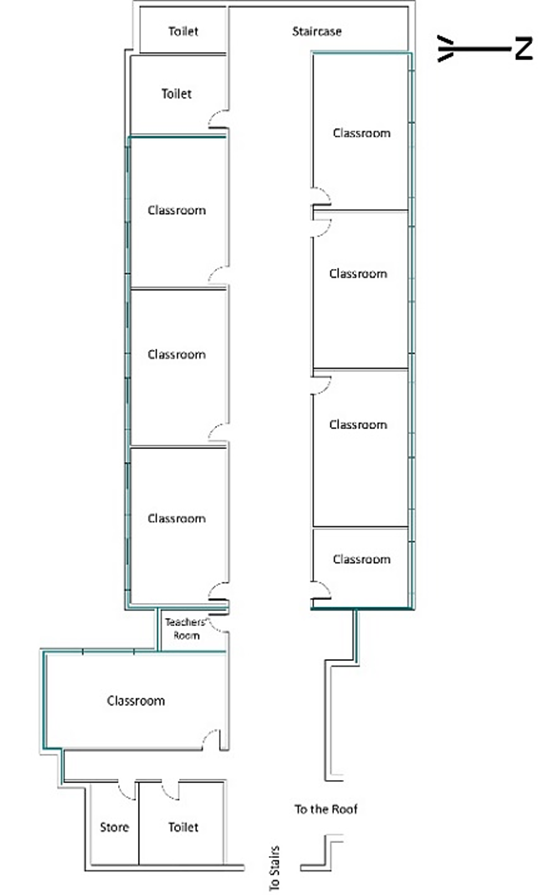
Fig. 6. Second floor plan of the school (N.T.S.). Blue (thick) lines indicate walls to host 5cm XPS insulation, CMU, and finish layers
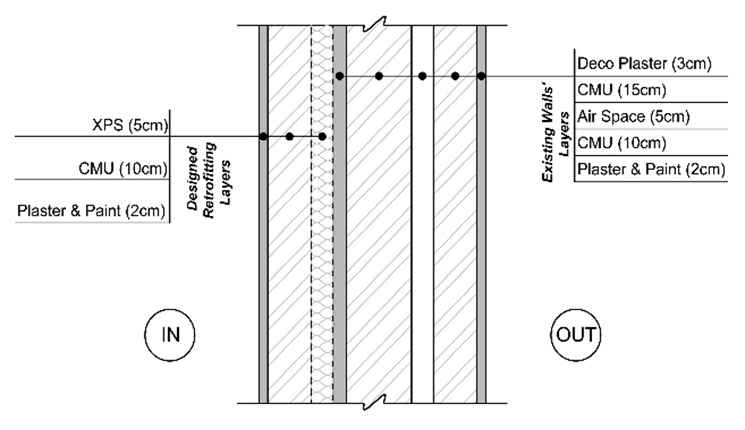
Fig. 7. Typical cross-section through an external wall of the case study school showing existing and added retrofitting layers (N.T.C.). Drawn by the 1st author using AutoCAD 2022
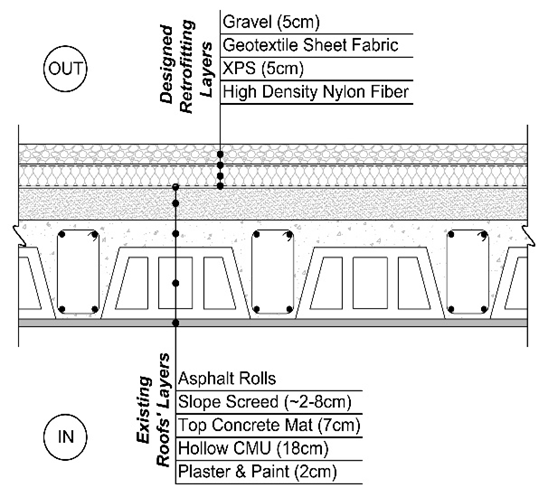
Fig. 8. Typical cross-section through the school’s two-way ribbed roof showing existing and added retrofitting layers (N.T.C.). Drawn by the 1st author using AutoCAD 2022
3 Results and discussion
The calculated and simulated retrofit model approaches, given their associated framework, were found rewarding and proved their energy efficiency. The school envelopes’ retrofitting scenario would inevitably secure reduced U-values reading 0.56 W/m2 K for each of external walls and roofs and 2.7 W/m2 K for windows, as detailed in Fig. 9. The results show noticeable improvement in thermal transmittance performance of the case study envelope elements when employing the associated retrofitting measures compared to the base case model, not to mention the adherence of U-values for the retrofitted walls and windows envelope elements to local codes. Retrofitting materials’ layers of roofs were hardly sized; when informed by associated literature and local experiences within the frame of economic feasibility and budget allocated to the project by funders, so that U-values after associated interventions are employed would read as an optimum of 0.56 W/m2 K, just above the maximum required by local codes of 0.55 W/m2 K. In summation, investment in such an envelope retrofitting scenario is envisaged to save ~26% of the Heating, Ventilation, and Air Conditioning (HVAC) conventional consumption of the school. Such an interesting finding about the pivotal role of retrofitting a building’s envelope is consistent with the findings of Ali and Hashlamun’s [26] study on retrofitting public school buildings in the Kingdom of Jordan.
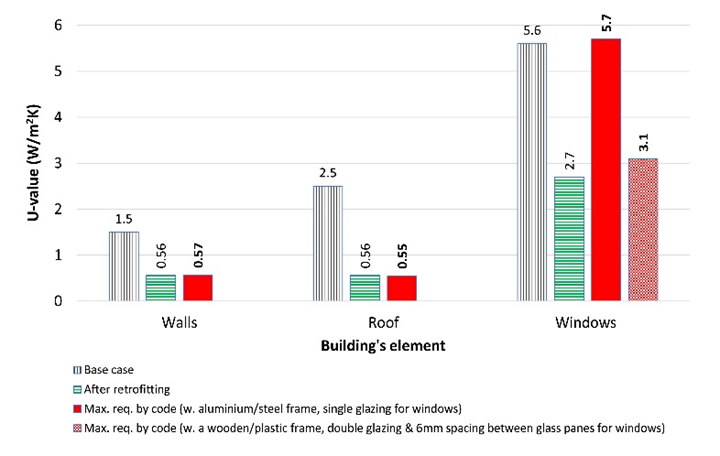
Fig. 9. U-values of the school’s envelope before and after retrofitting compared to the maximum values required by the local building energy code. Illustrated by the 1st author
To guarantee long-term performance, a number of technical factors must be considered when putting the suggested envelope's retrofitting measures into practice. A primary concern is thermal bridging at structural junctions (slabs and columns), which should be addressed by ensuring insulation continuity and using thermal break materials at interface points. Also, to mitigate moisture and interstitial condensation risks, a hygro-thermal analysis would guide the selection of a vapor retarder placed on the interior side of the insulation layer. Moreover, while the added structural load of the construction and insulation materials, e.g., XPS, insulative membranes, CMU, double-glazed, PVC-framed ones, is negligible for the existing reinforced concrete frame, the possible loss of usable floor area is a recognized trade-off for the enhanced U-values, and inevitably the reductions in cooling and heating demands. Furthermore, to preserve the integrity of the thermal envelope and stop localized energy leaks, meticulous detailing around window reveals is also crucial. This includes using high-performance sealants and over-insulation on frames.
Furthermore, based on annual operating hours ranging from 500 to 1100, depending on the illuminated space, as reported by a school spokesperson, calculations were made for retrofitting the lighting fixtures at the case study school, as shown in Table 2. Such energy-saving measures, when employed, would achieve ~51% of the electric energy savings of the total annual energy consumed by the building prior to the implementation of retrofit measures. Implementation of all three measures would require JOD 6,500 yet yielding ~4 years SPB and ~7 tons of CO2e reductions.
Table 2. Energy and carbon saving potentials when investing in a lighting retrofitting approach
|
Type of lighting retrofitting measure |
No. of lamps |
Connected load (kW) |
Annual energy savings (kWh) |
Annual savings [cost (JOD)] |
Investment (JOD) |
SPB (yrs.) |
CO2e reduction (ton) |
|
Replacement of the 36W fluorescent tubes with 18W LED ones |
685 |
12.3 |
13,149 |
1,315 |
5,480 |
4.2 |
6.0 |
|
Replacement of CFL fixtures with 18W LED round panel ones |
60 |
12.3 |
1,176 |
118 |
720 |
6.1 |
0.5 |
|
Replacement of the 250W MH fixtures with 50W ones |
6 |
0.3 |
900 |
90 |
300 |
3.3 |
0.4 |
|
Total |
751 |
13.7 |
15,225 |
1,523 |
6,500 |
4.3 |
6.9 |
Integrally, retrofitting the case study building’s envelope proved also to help curtailing the design heating and cooling capacities of inverter AC units in the associated school spaces compared to the scenario when keeping the building envelope components as the same as in the base case model, taking into consideration existing occupancy and equipment of classrooms and their orientation, thanks to carrier HAP simulator’s calculations (see Figs. 10 & 11). The bar chart illustrates ~29% reductions in such ACs’ capacities when installed in the assigned school spaces with the buildings’ envelopes being retrofitted concurrently. Inevitably, the expected annual consumption of proposed AC units after retrofitting the building’s envelope was found to be ~26% less than that for the base case model envelope’s scenario. Such findings on the fruitful combination and integration of investment in retrofitting school buildings’ envelope and upgraded AC system noticeably correspond to researchers' [39] findings toward significant energy savings in school buildings.
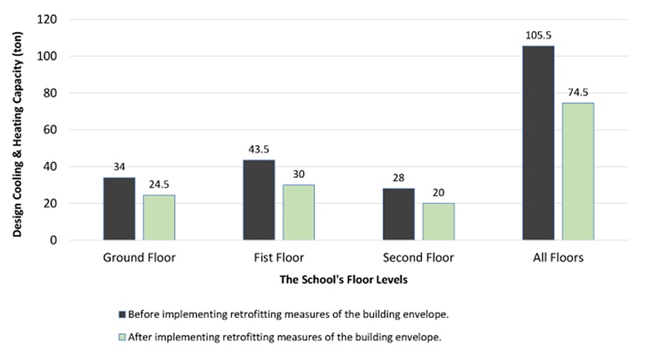
Fig. 10. Design heating and cooling capacities of proposed inverter AC units compared before and after retrofitting the school’s envelope across the three school buildings’ floors. Illustrated by 1st author
Average annual consumption of the base case school building was calculated as ~30,000 kWh, yet such energy demand is anticipated to jump to ~107,127 kWh after employing the designed energy saving measures. However, such retrofitting interventions conjunctionally proved to mostly break-even the envisaged energy bill of the school-after applying retrofitting measures in question (including installation of the inverter AC units) and given the estimated ~€230,000 total initial investment of the retrofitting interventions-with its massive energy demands by then, thanks to the installation of the 84-kWp PV system (see Fig. 12 and Tables 3 & 4) with a tiny average of ~1% per annum degradation over ~twenty-years lifespan (see Fig. 13). Such energy neutrality results would flag the PV system as a resilient dimension highly correspond with the findings of Younis and Tawalbeh [30] in their research as was introduced earlier. Furthermore, insulating walls and roofs, along with replacing single-glazed windows with double-glazed ones, is crucial for improving the resilience of building occupants. Only in year 20 would the 84 kWp system's annual energy production has a debt of about 1,000 kWh compared to the projected annual energy usage. Moreover, the calculated SPB of installing the system was found to be as few as less than 5 years.
All in all, it could be inferred that the retrofit approach corresponds to ~€126/m2 and ~€313/pupil benchmarks. Furthermore, the average yearly energy production of the 84 kWp PV system is calculated as a high yield of ~65 kWh/m2.year compared to the ~60 kWh/m2.year of the conventionally anticipated yearly energy consumption of the school. Also, the calculations showed ~84-ton CO2e reductions per annum when investing in such retrofitting measures in the school, which would help provide a healthy environment for the school’s users and hence pave the way for the government to fulfill its global commitments. Such a result, which exemplifies belonging sense initiatives toward participating in reducing the national energy bill, coincides again with another finding of Ali and Hashlamun’s [26] study that was referred to earlier and above. Relatively, employment of solar water thermal systems would save 50-80% of heating water energy bills, not to mention shielding from prospective fuel shortages and price jumps, thanks to the free sun’s bounty [58]. Logically, the feasibility study of the latter intervention was neglected as the base case school model involved only one electrical heater installed in the cafeteria, provided that its supply didn’t suffice the school’s huge need for hot domestic water, especially in heating seasons.
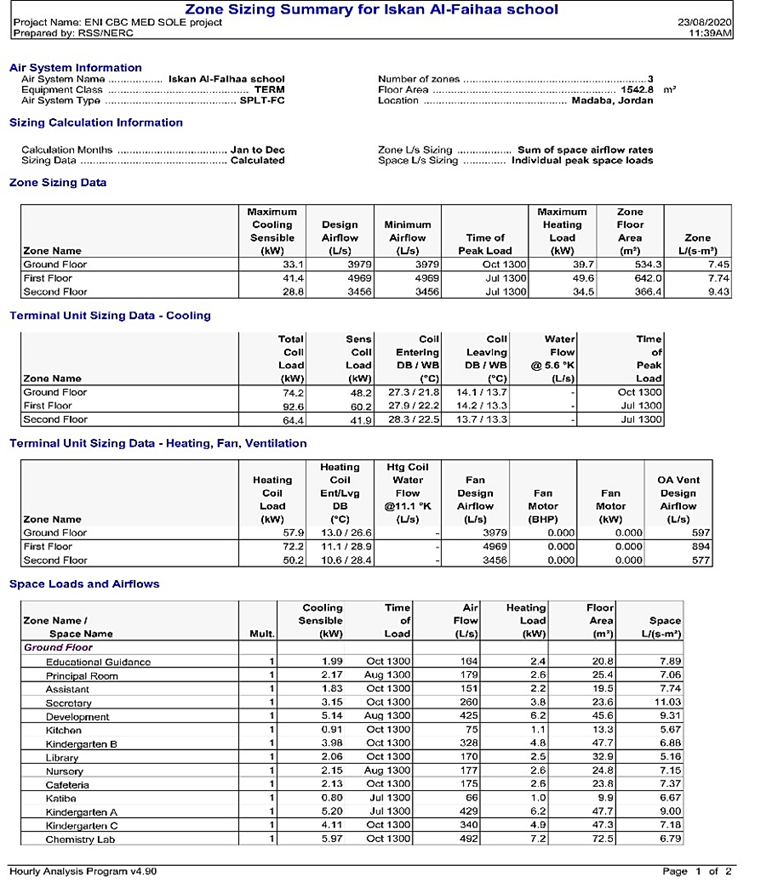
Fig. 11. A sample report generated by HAP illustrating AC capacities and zone sizing calculations for school floors
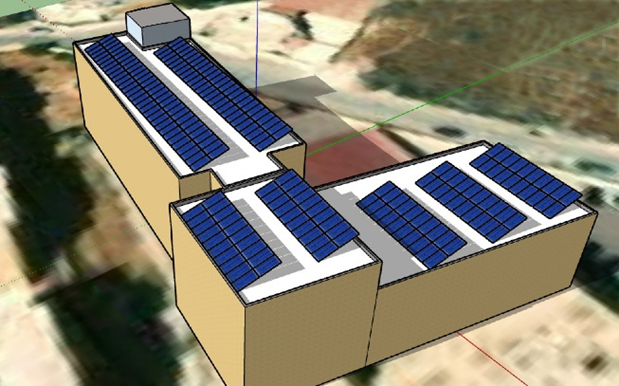
Fig. 12. A schematic diagram of the southeast east view of the proposed PV system panels mounted on the school’s roofs, facing south with a 10° tilt angle
Table 3. Site assessment summary for PV system on rooftops
|
Name of area |
Available area (m2) |
Number of PV modules |
PV capacity (kWp) |
|
Rooftop # 1 |
448 |
110 |
44 |
|
Rooftop # 2 |
156 |
40 |
16 |
|
Rooftop # 3 |
329 |
60 |
24 |
|
TOTAL |
933 |
210 |
84 |
Table 4. Estimated initial investments of the recommended energy-retrofitting measures for the case-study school
|
Energy-saving measure |
Estimated investment |
|
|
(JOD) |
(€) |
|
|
Replacing lighting units |
6,500 |
8,000 |
|
Domestic hot water system |
3,000 |
3,700 |
|
Thermal insulation & double glaze with PVC frame |
81,760 |
100,000 |
|
Heating and cooling systems (AC split units) |
34,000 |
42,000 |
|
PV System (84 kWp) |
58,800 |
73,000 |
|
TOTAL |
184,060 |
226,700 |
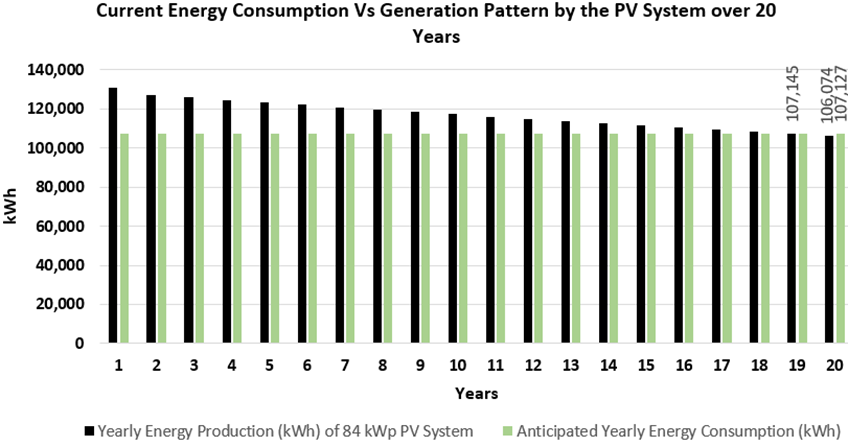
Fig. 13. Current energy consumption Vs generation pattern by the proposed PV system over 20 years
Psychologically, users of the school buildings, especially students, are envisaged to feel intimate and belong to their source of learning as physical results above proved to logically provide thermally comfortable environments and hot domestic water. Such latter vital needs, when preparing the energy audit, were found among major concerns that inevitably evoked and hence expressed by spokespersons from the school, which lacked such crucial services. Accordingly, students’ academic performance would improve as a result of improving the indoor environment of their classrooms and other school spaces. This finding is consistent with what researchers [25] concluded in their study on air quality and health of a school environment, as was previously pointed out. Relatively, Staff and students are more inclined to embrace energy-saving measures when they are aware of how their actions impact energy usage. Significant energy savings can be achieved, for instance, by taking easy steps like turning off lights when leaving a room or paying attention to heating and cooling. Furthermore, Students have a better understanding of the significance of sustainability and energy efficiency when energy education is incorporated into the curriculum. Topics like the science of energy use, renewable energy, and the effects of excessive use on the environment can all be covered in lessons. Additionally, providing staff and students with training sessions can educate them on energy-efficient techniques and technologies, promoting proactive behavior.
Moreover, the execution of school energy retrofits can be greatly impacted by external obstacles like legislative incentives, regulatory obstacles, and even community opposition. For instance, Energy retrofits may become more economically feasible with the help of government grants, incentives, and subsidies. Lack of such incentives or poor communication could make it difficult for schools to get the money they need. Also, tight building regulations may make retrofitting more difficult. Schools may encounter difficulties in complying with rules that are out of date or do not correspond with contemporary energy efficiency technologies, which could result in delays or higher expenses.
In their research on envelope retrofitting public-school buildings in the kingdom, Ali and Hashlamun [26] compared the feasibility of retrofitting existing school buildings versus constructing new ones through different scenarios in which the lifespan of school buildings was considered. Results analysis showed that public school buildings’ retrofitting is preferred and highly recommended in Jordan over erecting new ones, with consideration of their expected lifespans. Relatively, they found that retrofitting classrooms of schools built after 1990, which are characterized by having an expected lifespan equal to or larger than 23 years, are the thriftiest. This research case study falls under such a category, and its calculations of the conjunctional retrofitting packages model proved the feasibility of retrofitting associated public school buildings in Jordan, which would help achieve the objective of this research toward creating a resilient public school pilot model.
However, such a type of energy retrofit research would flag some limitations that should be addressed. For example, the scope of retrofitting measures that can be carried out may be limited by a lack of financing, which may have an impact on the selection of technologies and the magnitude of enhancements. Moreover, the structural restrictions of older school buildings may make it impossible to install contemporary energy-efficient equipment. Maintaining the building's historic character may also be necessary for retrofits. Climatically, the effectiveness of energy retrofit solutions can be impacted by local climate conditions, especially when it comes to passive design techniques. Using simulation programs is also an issue when discussing such a type of research. For example, many such simulators make assumptions about materials, weather, and occupant behaviour. The efficiency of passive techniques, such as natural ventilation associated with thermal inertia, may be misrepresented by these assumptions, which might not fully represent real-world situations. Furthermore, simulation software often makes use of historical weather data, which might not take localized differences or microclimates into consideration. This can have an impact on how passive methods are evaluated because real performance might vary greatly depending on the location. Also, funding for future retrofitting projects and maintenance for installed systems (such as PV ones) should be considered as a crucial issue in such types of projects. Moreover, this research adopted SPB as a preliminary economic indicator. The authors acknowledge that SPB does not account for the time value of money or long-term operational costs (O&M) and replacement costs (e.g., inverters). While SPB serves as a preliminary indicator, more comprehensive metrics like Net Present Value (NPV) or Life Cycle Costing (LCC) would be required for a full-scale investment analysis. Accordingly, future research would be highly welcome to verify the results and conclusions.
Future research on this project could tackle field employment of the retrofitting measures model as suggested in this study model, driven by its retrofit framework through monitoring applied interventions for comparisons and Post-Occupancy Evaluation (POE) purposes, and hence to conduct thermal comfort assessment and further validate the outcomes of this research model. Also, the framework could be nurtured with further inevitable futuristic inputs, which may develop the study model. The research field would also benefit from a multi-case approach through testing other school types (including size, building materials, etc.) and climatic conditions in Jordan to validate findings. Furthermore, future research could tackle Jordan’s unique socio-economic and policy landscape impact on the feasibility of retrofitting and compare similar projects in the region.
All in all, retrofitting existing public schools is found to be feasible when carefully selecting passive retrofitting materials and choosing active systems, yet integrally. Such integration is believed to generate noticeable reductions in energy bills of school buildings and, inevitably, in CO2e emissions.
4 Conclusion
The methodological approaches of this research proved the feasibility of retrofitting public schools in Jordan when their lifespan is considered. The case study of this project was found eligible for five retrofitting passive and active interventions and hence underwent energy simulations using carrier HAP and associated fiscal calculations. Such a methodological approach has generated noticeable energy and CO2e savings of ~84-ton reductions per annum, in addition to adherence to local building energy codes, when retrofitting interventions are concurrently employed. Installation of an 84-kWp PV system proved to break even the school building’s energy bill with its expected energy demand (including that by inverter AC units) with less than 5 years SPB. Also, building envelopes retrofit generally rendered them as compatible with associated local energy codes when U-values noticeably dropped to 0.56, 0.56, and 2.7 W/m2K compared to the base-case model calculated U-values of 1.5, 2.5, and 5.6 W/m2K, for exposed walls, roofs, and windows, respectively. Such a finding would inevitably be positively reflected on thermal comfort and performance of the school’s users, especially pupils. Relatively, the suggested solar thermal system would promise to provide students with the domestic hot water they lack. Furthermore, retrofitting existing interior lighting fixtures with LED ones also lowered the energy bill in question with only ~2 years SPB and ~8-ton CO2e reductions. Hence, the authors believe that the suggested retrofitting approaches framework of the case-study school in this research is envisaged to work associatively as a pilot retrofitting model toward resilient public schools and to disseminate knowledge in the field of retrofitting public school buildings in Jordan and other locations, when geographic setting, construction materials, and lifespan of the buildings are considered and projected. Locally, the concept of retrofitting the school itself is envisaged to deliver important messages to community members about responsible dedication toward creating better sustainable environments, through evoking and enriching a sense of belonging to their micro community, the school, and hence the macro-ones.
Acknowledgements
The authors are very grateful to the European Union (under the ENI CBC Mediterranean Sea Basin Programme) and the MoE/Jordan for funding this project. The authors would also like to acknowledge all parties who provided the necessary data to make this article successful. Additionally, the authors acknowledge Middle East University (MEU), Amman, Jordan, for funding the publication of this manuscript.
References
- Sandri, S., Hussein, H., & Alshyab, N. (2020). Sustainability of the energy sector in Jordan: Challenges and opportunities. Sustainability, 12(24), 10465. https://doi.org/10.3390/su122410465
- Alrwashdeh, S. S. (2022). Energy sources assessment in Jordan. Results in Engineering, 13, 100329. https://doi.org/10.1016/j.rineng.2021.100329
- Owhaib, W., Borett, A., AlKhalidi, A., Al-Kouz, W., & Hader, M. (2022). Design of a solar PV plant for Ma’an, Jordan. In IOP Conference Series: Earth and Environmental Science (Vol. 1008, No. 1, Article 012012). IOP Publishing. https://doi.org/10.1088/1755-1315/1008/1/012012
- Kotsarinis, C. (2009). Systems and knowledge engineering design of an urban vertical axis wind turbine (Master’s thesis). Delft University of Technology.
- Al-Qteishat, A. S. (2022). Renewable energy sources and the government strategy for developing energy sector in Jordan. RUDN Journal of Public Administration, 9(4), 456–465. https://doi.org/10.22363/2312-8313-2022-9-4-456-465
- Ministry of Energy & Mineral Resources. (2024, May 12). Summary of Jordan energy strategy 2020–2030. https://www.memr.gov.jo/EBV4.0/Root_Storage/EN/EB_Info_Page/StrategyEN2020.pdf
- REN21. (2024, July 19). Renewables 2024 global status report: Global overview. https://www.ren21.net/reports/global-status-report/
- Leal Filho, W., Emblen-Perry, K., Molthan-Hill, P., Mifsud, M., Verhoef, L., Azeiteiro, U. M., & Price, E. (2019). Implementing innovation on environmental sustainability at universities around the world. Sustainability, 11(14), 3807. https://doi.org/10.3390/su11143807
- Silvestre, B. S. (2015). A hard nut to crack! Implementing supply chain sustainability in an emerging economy. Journal of Cleaner Production, 96, 171–181. https://doi.org/10.1016/j.jclepro.2014.01.009
- Al-Ghriybah, M. (2022). Assessment of wind energy potentiality at Ajloun, Jordan using Weibull distribution function. Evergreen, 9(1), 10–16. https://doi.org/10.5109/4774211
- Younis, A., Al-Husban, Y., Abu-Rumman, G., & Haddad, N. (2024). A smart vertical farming hub at Isra University, Jordan: Toward the development of resilient cities. Sustainable Development of Mountain Territories, 16(1), 379–396. https://doi.org/10.21177/1998-4502-2024-16-1-379-396
- Almajali, T. A. H., Ismail, F. B., Gunnasegaran, P. A., Kazem, H. A., Shurafa, S. M. A., & Al-Muhsen, N. F. (2025). Solar-powered advances in water desalination: A comprehensive review of recent research. Applied Solar Energy, 61(2), 117–145. https://doi.org/10.3103/S0003701X2460303X
- As’ad, S. (2024). Why renewable energy gained attention and demand globally? Nature Environment and Pollution Technology, 23(1), 467–473. https://doi.org/10.46488/NEPT.2024.v23i01.042
- Montanet, V. (2024, August 5). Retrofitting academic institutions for a greener tomorrow. Built Environment ME. https://www.builtenvironmentme.com/news/community-management/retrofitting-academic-institutions-for-a-greener-tomorrow
- Hautamäki, A., & Oksanen, K. (2016). Sustainable innovation: Solving wicked problems through innovation. In Open innovation: A multifaceted perspective (pp. 87–110). https://doi.org/10.1142/9789814719186_0005
- Machado, C. F., & Davim, J. P. (2023). Sustainability in the modernization of higher education: Curricular transformation and sustainable campus—A literature review. Sustainability, 15(11), 8615. https://doi.org/10.3390/su15118615
- Wilkinson, S. (2012). Analysing sustainable retrofit potential in premium office buildings. Structural Survey, 30(5), 398–410. https://doi.org/10.1108/02630801211288189
- Wang, B., Xia, X., & Zhang, J. (2014). A multi-objective optimization model for the life-cycle cost analysis and retrofitting planning of buildings. Energy and Buildings, 77, 227–235. https://doi.org/10.1016/j.enbuild.2014.03.025
- International Energy Agency. (2022). Renovation of near 20% of existing building stock to zero-carbon-ready by 2030 is ambitious but necessary. https://www.iea.org/reports/renovation-of-near-20-of-existing-building-stock-to-zero-carbon-ready-by-2030-is-ambitious-but-necessary
- Abu Dayyeh, A. (2023). Retrofitting existing building. The Jordan Times. https://jordantimes.com/opinion/ayoub-abu-dayyeh/retrofitting-existing-building
- International Energy Agency. (2022). Technology and innovation pathways for zero-carbon-ready buildings by 2030. https://www.iea.org/reports/technology-and-innovation-pathways-for-zero-carbon-ready-buildings-by-2030
- Abu-Attieh, S., Al-Omari, Z., & Emar, W. (2022). Management and development of a residential energy storage system: A case study Jordan. Journal of Applied Engineering Science, 20(3), 778–787. https://doi.org/10.5937/jaes0-36314
- Younis, A., Taki, A., & Bhattacharyya, S. (2020). Sustainability issues in low-middle income apartments in urban Amman, Jordan: Heating devices and health concerns. WIT Transactions on the Built Environment, 193, 27–38. https://doi.org/10.2495/GD170031
- Tashtoush, G. M., Freewan, A. A., & Al Dallu, I. (2022). Retrofit measures evaluation considering thermal comfort and energy efficiency in school buildings using design of experiments. Scholars Journal of Engineering and Technology, 10(6), 91–101. https://doi.org/10.36347/sjet.2022.v10i06.001
- Sadrizadeh, S., Yao, R., Yuan, F., Awbi, H., Bahnfleth, W., Bi, Y., & Li, B. (2022). Indoor air quality and health in schools: A critical review for developing the roadmap for the future school environment. Journal of Building Engineering, 57, 104908. https://doi.org/10.1016/j.jobe.2022.104908
- Ali, H., & Hashlamun, R. (2019). Envelope retrofitting strategies for public school buildings in Jordan. Journal of Building Engineering, 25, 100819. https://doi.org/10.1016/j.jobe.2019.100819
- Kamel, E., & Memari, A. M. (2016). Different methods in building envelope energy retrofit. In Proceedings of the 3rd Residential Building Design & Construction Conference. Penn State University. https://www.phrc.psu.edu/assets/docs/Publications/2016RBDCCPapers/Kamel-2016-RBDCC.pdf
- TCL. (2023). What is the difference between an inverter and a non-inverter AC? https://www.tcl.com/global/en/blog/what-is-the-difference-between-inverter-and-non-inverter-ac
- Elkhapery, B., Kianmehr, P., & Doczy, R. (2021). Benefits of retrofitting school buildings in accordance with LEED v4. Journal of Building Engineering, 33, 101798. https://doi.org/10.1016/j.jobe.2020.101798
- Younis, A., & Tawalbeh, M. (2024). Innovative energy retrofit approach of historical buildings using HBIM process: The guest house of Al-Karak Greater Municipality in Jordan, a case study. Civil Engineering and Architecture, 12, 1219–1234. https://doi.org/10.13189/cea.2024.120239
- Abu Dayyeh, A. (2023). Schools retrofitting priorities. The Jordan Times. https://jordantimes.com/opinion/ayoub-abu-dayyeh/schools-retrofitting-priorities
- Department of Statistics. (2023). Jordan statistical yearbook 2023. https://dosweb.dos.gov.jo/product/jordan-statistical-yearbook-2023/
- Ali, H. H., & Al-Hashlamun, R. (2019). Building envelope thermal upgrade for school buildings in Jordan. In IOP Conference Series: Earth and Environmental Science, 290(1), 012068. https://doi.org/10.1088/1755-1315/290/1/012068
- SMEs and Business Development. (2022). Thanks to SOLE intervention in Jordan, students of Madaba are about to enjoy an energy upgraded school. https://www.enicbcmed.eu/thanks-sole-intervention-jordan-students-madaba-are-about-enjoy-energy-upgraded-school
- C40 Knowledge Hub. (2023). How to maximise the benefits of school retrofit programmes. https://www.c40knowledgehub.org/s/article/How-to-maximise-the-benefits-of-school-retrofit-programmes
- Ministry of Education. (2018). Education strategic plan 2018–2022. https://planipolis.iiep.unesco.org/sites/default/files/ressources/jordan_esp_2018-2022_0.pdf
- Ministry of Education. (2022). Mid-term review report of the Jordan education strategic plan 2018–2022. https://moe.gov.jo/sites/default/files/mid-term_review_report_of_the_jordan_education_strategic_plan.pdf
- UNESCO. (2022). Building a resilient and responsive education system in Jordan: Strengthening evidence-based crisis-sensitive planning and governance. https://jordan.un.org/sites/default/files/2023-06/UNESCO%20EIE%20Data%20Evidence%20and%20Learning%20-%20Case%20Study%20MoE%20JORDAN_FINAL.pdf
- Aldawoud, A., Hosny, F., & Mdkhana, R. (2020). Energy retrofitting of school buildings in UAE. Energy Engineering, 117(6), 381–394. https://doi.org/10.32604/EE.2020.011863
- Zakaria, A. H., & Abdelkader, M. (2021). Towards attaining net zero-energy buildings through retrofitting school buildings. International Journal of Current Engineering and Technology, 11(3), 314–323. https://doi.org/10.14741/ijcet/v.11.3.3
- Bogaerts, V. R., & Sakoda, K. (2017). Making schools resilient at scale: The case of Japan. World Bank Group. http://documents.worldbank.org/curated/en/476701508164287969/Making-schools-resilient-at-scale-the-case-of-japan
- World Bank Group. (2016). Making schools resilient at scale: The case of Japan. https://gpss.worldbank.org/sites/gpss/files/knowledge_products/2019/Japan_MakingSchoolsResilientatScale.pdf
- Nippon.com. (2021). Nearly 100% of Japan’s public elementary and junior high school buildings meet earthquake resistance standards. https://www.nippon.com/en/japan-data/h01098/
- SAFTI FIRST Team. (2015). Retrofitting schools is greener and cheaper. https://safti.com/articles/rebuilding-americas-schools-its-greener-and-cheaper-to-reuse-existing-schools/
- Ashden Climate Solutions in Action. (2022). National emergency retrofit response needed for UK schools. https://letsgozero.org/national-emergency-retrofit-response-needed-for-uk-schools/
- Zinzi, M., Agnoli, S., Battistini, G., & Bernabini, G. (2014). Retrofit of an existing school in Italy with high energy standards. Energy Procedia, 48, 1529–1538. https://doi.org/10.1016/j.egypro.2014.02.173
- National Energy Research Centre. (2024, August 11). SOLE project – Implementing pilot action in Iskan Al-Faiha School in Madaba, Jordan. http://www.nerc.gov.jo/En/NewsDetails/Sole_Project__Implementing_Pilot_Action_in_Iskan_AlFaiha_School_in_Madaba
- SMEs and Business Development. (2024, August 11). High energy efficiency for the public stock buildings in Mediterranean. https://www.enicbcmed.eu/projects/sole
- Özdemir, M., & Ofluoglu, S. (2019). Compliance of software in thermal load calculations in buildings: The case of BIM and HAP software. In Eurasian BIM Forum (pp. 147–157). Springer. https://doi.org/10.1007/978-3-030-42852-5_12
- Al Abir, A. (2019). Hand calculation and HAP software result comparison for assessing total cooling load of a building bedroom. In Proceedings of the International Conference on Mechanical Engineering and Renewable Energy (ICMERE).
- Zaphar, S., & Sheworke, T. (2018). Computer program for cooling load estimation and comparative analysis with hourly analysis program (HAP) software. International Journal of Latest Technology in Engineering, Management & Applied Science, 7(6), 53–61.
- Fassbender, R. (2024, August 9). What is the best energy modeling software? https://energy-models.com/blog/what-best-energy-modeling-software
- Qawasmeh, B. R., Al-Salaymeh, A., Ma’en, S. S., Elian, N., & Zahran, N. (2017). Energy rating for residential buildings in Amman. International Journal of Thermal & Environmental Engineering, 14(2), 109–118. https://doi.org/10.5383/ijtee.14.02.004
- Weather and Climate. (2025, April 2). Madaba, Jordan – Weather and climate. https://weather-and-climate.com/average-monthly-Rainfall-Temperature-Sunshine,madaba,Jordan
- Professional Engineering Consultants. (2021). Photovoltaic installation structural feasibility report, Al Faiha Public School, Madaba, Jordan PV panels on roof [Unpublished report].
- Royal Scientific Society, Jordan. (2020). Energy efficiency & renewable energy audit report, Al Faiha'a School, NERC/01/2017/08/05 [Unpublished report].
- Shamout, S., & Al-Khuraissat, M. (2018). Your guide to building envelope retrofits for optimising energy efficiency & thermal comfort in Jordan. Jordan Green Building Council & Friedrich Ebert Stiftung.
- U.S. Department of Energy. (2024, September 5). Estimating the cost and energy efficiency of a solar water heater. https://www.energy.gov/energysaver/estimating-cost-and-energy-efficiency-solar-water-heater
Conflict of Interest Statement
The authors declare that they have no known competing financial interests or personal relationships that could have appeared to influence the work reported in this paper.
Author Contributions
Data Availability Statement
The data supporting the findings of this study are available from the corresponding author upon reasonable request.
Supplementary Materials
No supplementary materials are associated with this study.